Friday, March 23, 2012

Two Days Customized Kids's Course


 Two Days Customized Kids's Course
Date : 5th - 6th March 2012

Exploring the outdoors in Nepal has never been easier or more exciting than in Initiative Outdoors's safe hands! I.O. is happy to announce to our members and friends that we have just completed one of our new course: customized course. This program allows you and your child to create a unique adventure and is perfect for long weekends or school holidays.
Preferably, all customized courses will be 2 days (minimum) to 7 days (maximum) in length and can be created for either individuals or small groups. With a low student to instructor ratio we can ensure superior quality of instruction. I.O. will also happily work with you to custom design a course to meet your goals/needs. 


On 5th – 6th March 2012, I.O. organized two days customized kids’ course for the students of French school. The activities that were included in the course were team and trust building exercises, fun games, health and sanitation workshop, abseiling, Bouldering and knot classes. The course was designed especially for 5 - 16 year olds kids and there were fourteen participants altogether for two days.

There may be varying with course length, desired activities, number of participants, and location depending upon the cost of the course. Generally, our course lengths can be shortened or extended to suit your availability, and additional components or themes can be integrated into a course to accommodate to your requirements. 
We continuously organize such programs for kids. If you are outside of this age range, don't worry, we can tailor the concept to meet the needs of people from all walks of life. Let us know what interests you and we'll do the rest!

Rajesh Lama
General Manager
For more information, please contact us at our office (2111505)

Thursday, March 22, 2012

Earthquake First Aid

Earthquake First Aid
5th to 6th of December 2011 

Earthquake first aid course is specially provided to deal with the most likely issues arising from an earthquake situation. Due to time constraints of the participants, this course is being conducted in 2 x 8 hours session, over 2 consecutive days. Different topics that will be practiced include CPR for adults and children, the Primary and Secondary Assessment Systems, shock, fractures & splinting, soft tissue injuries and bandaging, spine and head injuries, and burns.
The course is being conducted in a number of the participants' own homes. It is not necessary to attend all of the days if you have personal commitments. It will be possible to join in the days missed in the future, subject to space being available. If you would like to run a dedicated course similar to this, please contact our office with your requirements and we will be happy to facilitate you.


A 16-hour first aid course specifically designed to cover injuries caused by earthquake damage. To be taught in four (4) 8-hour segments, with the first and fourth day being optional for those interested in learning more complicated treatments and/or CPR. All the materials such as course manual, instruction, CPR certificate from AHA, and instruction on how to use the components of the first aid kit will be provided to all the participants.


The following topics were discussed all over the course

• Adult CPR (American Heart Association certification)
• Child CPR (no certificate)
• CPR Exam
• Primary Assessment System
• Secondary Assessment
• Shock
• Fractures
• Splinting
• Soft tissue Injuries
• Bandaging
• Spine Injuries
• Head Injuries
• Burns

At the end of the course participants were provided with international certification in terms of CPR from AHA.


Rajesh Lama
General Manager
Initiative Outdoor 

Sunday, March 11, 2012

Advanced Wilderness First Aid


 ADVANCE WILDERNESS FIRST AID
DATE : 14TH - 18TH FEB, 2012 


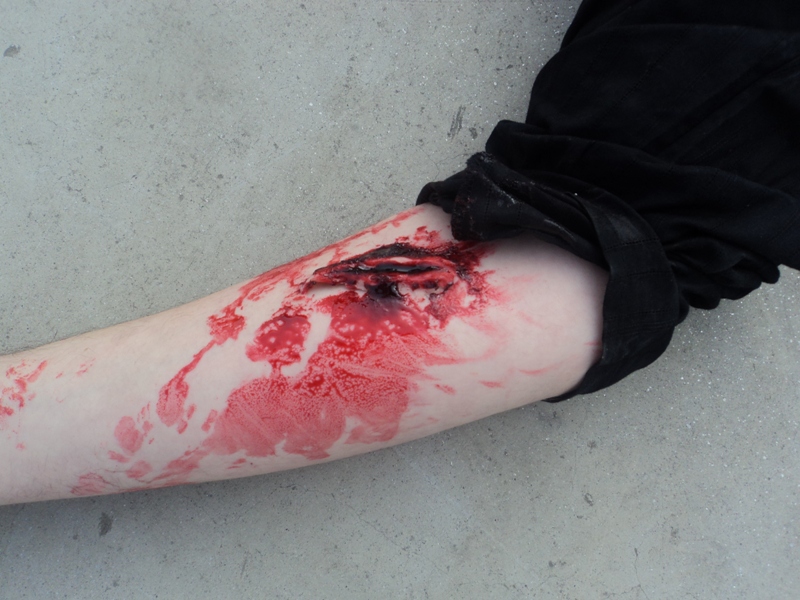
The Advance Wilderness First aid course (AWFA) is designed for trip leaders and those traveling or working in remote areas that need a more extensive training program than the Wilderness First Aid course. This 5-day course focuses on stabilization, treatment and evacuation guidelines for patients in back country environments.

From 14 to 18 February 2012 initiative outdoor ran internationally recognized wilderness first aid courses. These courses are essential for anyone working in the outdoors industry, and are often per-requisites for anyone wishing to work abroad. The course was delivered from SOLO wilderness medical organization. SOLO's courses have become industry standards in the US, and have been recognized by a number of universities there also. The course includes CPR certification  awarded by the American Heart Association.

All courses were taught by a scenario-based, hands-on learning approach as opposed to being classroom based. Course took place at Nepal Scout Camp, Kakani with residential (4 meals + camping accommodation). There is no much difference in the topic that will be taught in advanced course from basic course. The course is based on long term patient care management and specific injury evaluation.


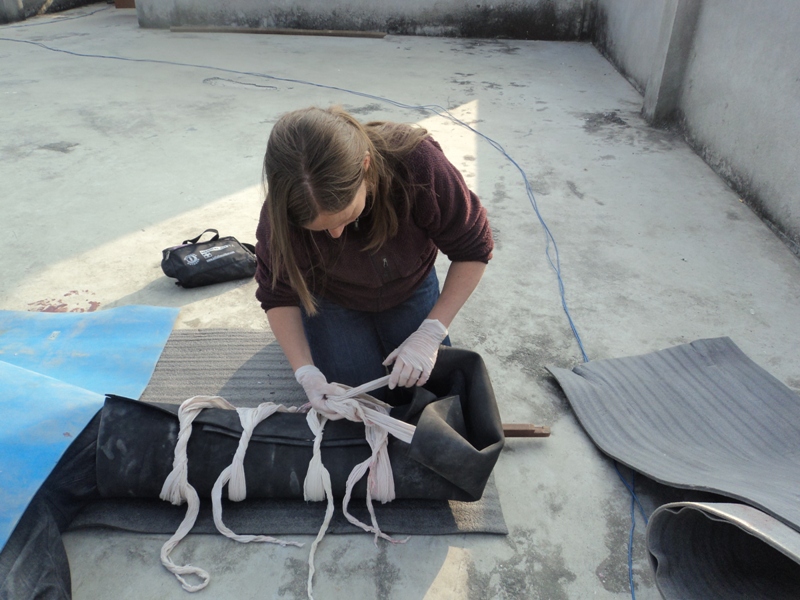
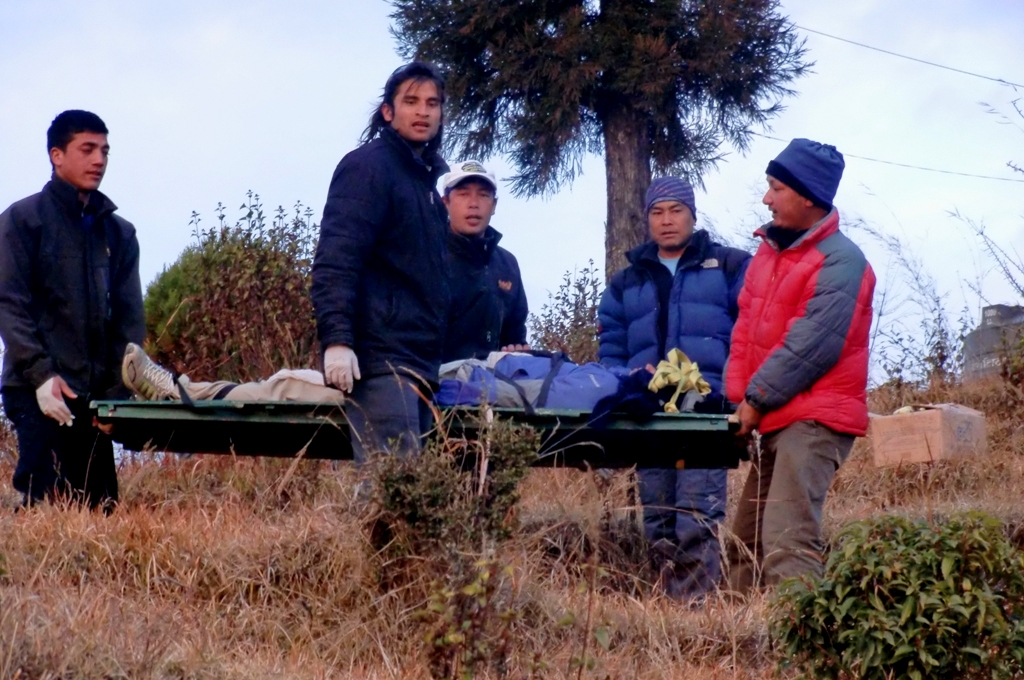
Advanced Wilderness First Aid course also covers a topic of first aid subjects, emphasizes leadership skills, and presents new skills such as building improvised litters and litter carrying.


Sanjay Bhatta
Participants

Wednesday, January 5, 2011

First Aid Courses

Namaste!

December was a busy month for Initiative Outdoor. From December 15-17 we ran a WFA course with 8 students only to turn around on the 19th and start a 5-day AWFA with 11 students. Both courses were taught at the Kakani Center for International Training. The classroom was set up on a mountaintop overlooking the Kathmandu Valley on one side and the Himalayas on the other side. During lunch breaks the students, most of whom are guides, would identify the separate mountain ranges (Langtang, Manaslu, and on crisp days the Annapurna Range and Machapuchare). Despite being the middle of the winter, it was warm and sunny during the day, which made the outdoor classroom a perfect venue. 


While most of the students in the AWFA work as guides for the DAV Summit Club, two students work for SIT Nepal, and one is a professional mountain biker. All but one of the students spoke varying degrees English, so the course was taught half in Nepali and half in English. As with the previous courses here, simplifying the medical terms was the biggest hurdle. Words like “laryngospasm” needed to be dissected (spasm of the larynx) and redescribed (a closing of the tube leading to the lungs) to make the material clear. In addition to the challenge of memorizing and utilizing these terms, the students have the task of remembering acronyms that are based on English words. For example, AMPLE history is a great tool if you are familiar with the definition and spelling of “ample,” but if you don't know what ample means, the acronym has no significance.


Despite these hurdles, the class had a great sense of humor. Every time a helicopter was called for an evacuation the call was placed to Washington D.C. because all of the helicopters in Nepal were busy. We were assured that the response time from the States would be approximately 5 minutes.

Both courses have been slightly amended to fit the scenarios most likely to be encountered in Nepal, so a lot of time was spent perfecting splints, practicing with a Gamow bag, and clearing the spine for ease of transport.

Some lectures demonstrated marked differences between life in the States and that in Nepal. One Western assumption that stands out the most came up when teaching about lightning and safe places to go during a thunderstorm. The course teaches that it is always safe to go into a house, but two of the students had stories of families being killed by lightning strikes to their homes. The difference being that the image of a house in the West is of one that would protect you from lightning. In the examples that they referenced the houses had dirt floors, wooden sides, and no means for safely grounding the lightning. Of course that isn't a safe place during a thunderstorm.

Another dramatic difference between medical care in Nepal and in the West is response time. Kathmandu remains the only place in the entire country where one can receive the shots for rabies, yet many of the areas with the highest risk for rabies are days away from Kathmandu. Imagine the only resource for the rabies vaccine in the United States being located in Missouri and the only way to get there is by driving. Recognizing and addressing the challenges to accessing healthcare in Nepal is both an integral part of these courses and the impetus behind encouraging both guides and urban residents to become certified in wilderness medicine.

Initiative Outdoor is currently advertising a WFR for late February and is gauging interest for more AWFA and WFA courses for the spring.

Pheri Betola,

Chandra Ale and Initiative Outdoor

Initiative Outdoor, PO Box 23023, 3/336 Gyanmandala, Jhamsikhel 3, Lalitpur, Nepal
P:+977-(0)1-2111505
E:info@initiativeoutdoor.com
W:http://www.initiativeoutdoor.com
 
F: Facebook
Y: Youtube